It’s been a week since most of the major metro school systems have shut down. If you’re freaking out because you think your kids are missing out on valuable learning, here we go.
Bottom line: if I can teach 40 kids at a time, you can handle one, especially the one that you love. And it doesn’t take 6 hours a day — they can learn more at home in two hours (although you may need them off your back for six).
I’d like to introduce the Feynman technique as the answer to the question: how the Sam Hill am I going to keep these kids learning without a teacher, four walls, and locks on all the doors?
You can use the Feynman technique for anything you’re interested in learning.
Kids, if your parents tell you you’re on your own but want you to produce something, you can follow in Feynman’s footsteps to really nail a difficult concept or complex topic and then shout, “In yo’ face, aged ones!” politely, of course.
Feynman’s technique is brilliant in its simplicity. Not to get all high-falutin’ on you, but had Einstein lived long enough he would’ve loved it. Einstein said,
“If you can’t explain it simply, you don’t understand it well enough.”
It’s possible Einstein made that same comment in Feynman’s presence; the two did know each other. Einstein presided over some of Feynman’s classes at Princeton and they met occasionally after Feynman moved on from the august New Jersey institution.
At any rate, Feynman created this workflow, and anyone can use it.
- Choose a topic/concept.
- Teach it to a child.
- Identify gaps in understanding and go back to source material to fill them.
- Revise your explanation from part 2 with the work from part 3 and, optionally, simplify it.
Step 1: Choose a topic
What is your kid interested in? Dinosaurs? Make-up? Horses? World War II German artillery? Drugs? Sex? Rock and roll?
Bring it on.
Take out a piece of paper and write the topic in large letters on the top of the page.
Step 2: Teach it to a child.
Next, they’ll write down everything they know about the topic as simply and clearly as they can. They should imagine that they’re explaining to someone a couple years younger than they are, with all the limitations of vocabulary and attention-span that entails.
For the sake of your sanity and getting things done, if your kid has chosen an enormous topic like, say, weapons of World War II (I work with lots of teenage boys), you may want to use the Question Formulation technique to help them narrow the scope of their work. This is actually a fun exercise to complete with your kids, but you need to follow the rules, mom and dad, or the final question will belong to you instead of your kid. If you’re a student doing this on your own, this may be where FaceTiming your friends and geeking out on a topic you all love will pay dividends in terms of your learning (and getting your parents off your back).
Step 3: Identify and fill gaps in your understanding.
During step 2, they might realize there are things they don’t know that they need to find out in order to thoroughly explain to their younger student.
This is where research skills can be built/improved, and also where supervision may be necessary. Start here to learn how to search effectively: quotation marks, – signs, asterisks, etc. are little known search heroes.
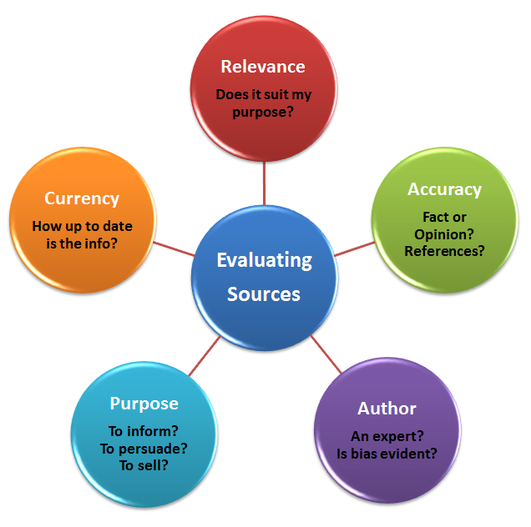
Kids are going to have to find ways to fill in the gaps in their knowledge. The internet is going to be most people’s go-to, and you can just leave it at that, but this is an excellent opportunity for you to discuss with them assessing the credibility of sources.
If they’re young you’re going to have to source the information to help them. I don’t know that I would recommend YouTube for younger kids, just because they don’t have the note-taking skills to make video work well as a method of direct instruction, but you could use it if you’re able to supervise their screen time and stop the video for them periodically so they can record pertinent information.
It can be helpful to teach them to Google Search their topic with the phrase “for kids” in quotes at the end. This will generally find you kid-friendly sources of information. If you’re willing to spend a little money, Encyclopedia Britannica has a beautiful site for kids for $8 a month ($75/year) for unlimited access. Encyclopedia.com is comprehensive and well-laid out and free. Brainpop is pretty great, but may not be as specific as your kid needs to fill in the gaps in her knowledge on a specific topic.
Libraries aren’t open right now, at least not in my metro or in many of my friends’, but if you have a library card you can access a ton of digital research sources. For my high school students, this can be a boon or a headache, depending on their ability to navigate their city/county system. But if you need to do heavier research and don’t like what Google is dishing out, try a trip to the digital resources page of your local library. Many school districts also pay for digital resource libraries; your school district office likely still has a librarian available to help you navigate these resources.
Remember, that for learning to happen, kids need to do something. When it comes to filling in knowledge-gaps through research, I recommend note-taking, pretty much exclusively, unless your kid has a photographic memory (which many small children actually seem to have, or at least a sponge-like ability to recall discrete facts, so don’t discount that).
Depending on your access to technology, your kids (or you) could be creating one-page sketch notes or diagrams in Adobe Illustrator as you listen to audio or watch a video. But if you’re like most families, paper and pencil are going to be your go-to.
Notes don’t have to be exhaustive. They should just fill in the blanks where your kid is/you are missing information.
For kids in 5th to 12th grade who want to just ingest content without processing it much, give them the gift of structure in the form of Cornell Notes. If they hate structure, or want to add creativity to note-taking structure or they want to use creativity to build a structure that makes sent to them, (creativity is GREAT for memory, FYI) have your kid try sketchnotes.
Whichever way you or your child process information, it’s important that you take the time to process it, because that makes finishing Feynman a lot easier.
Step 4: Revise your explanation for simplicity.
So now that we know what we didn’t know before and we have a more complete understanding of our topic of choice, it’s time to present our findings.
Can your kid just show you what they wrote and do a drawing and talk to you?
Sure. That’s a legitimate way to show what they’ve learned.
But you know what’s more fun?
Screencasting. YouTubing. Writing a letter… and sending it to an expert.
It’s time to buck up, buttercup, and ask someone more knowledgeable than you what you could have done better. If you’re super hardcore, you can see how you stand up under the withering criticism only YouTube commenters can provide.
If you need more ideas for how you/your kid can show learning authentically, here you go, my lovelies. It doesn’t have to be a report, mom and dad.
Give them a nudge, show that you care about what they care about, and let them show you what they can do. Then you can build on it, together.
TL;DR: You can use the Feynman technique to master anything.
STUDENTS: Take something you’re interested in and try to explain it in a way a kid 4-6 years younger than you could understand. DO something, don’t just think about it. Use these tips to conduct effective research, but know that watching videos or reading about a concept isn’t enough; to actually learn it you have to go through the creative process to nail down what you really know and what you don’t. And you need to put it all together, whether it’s written, drawn, acted out, etc.; the creative process turns information gathering into easily recalled knowledge, i.e., when you create something out of what you learned, you OWN the knowledge. It’s not learning if you can’t remember it a month from now.
PARENTS: Let your child choose a topic that floats their boat; intrinsic motivation produces better results. Support them in searching for relevant information. Let them choose the way they want to present the information. Periodically check their progress and give actionable feedback; try to keep your tone even and calm. Judge the work, not the kid. If you want to go next level, post their work on your social media and solicit helpful feedback and let your child revise their work until it’s great.
TEACHERS: I get it, you have content standards. But within those, can you free your students, at least a little? Let them ask their own questions. Let them find their own answers. Let them present their answers in novel, beautiful ways that aren’t in your wheelhouse. We’re all looking for freedom. You have the power to give it to your students.
 Educated and Free